2025 EOY Wrap: Inside the Experimentation Engine

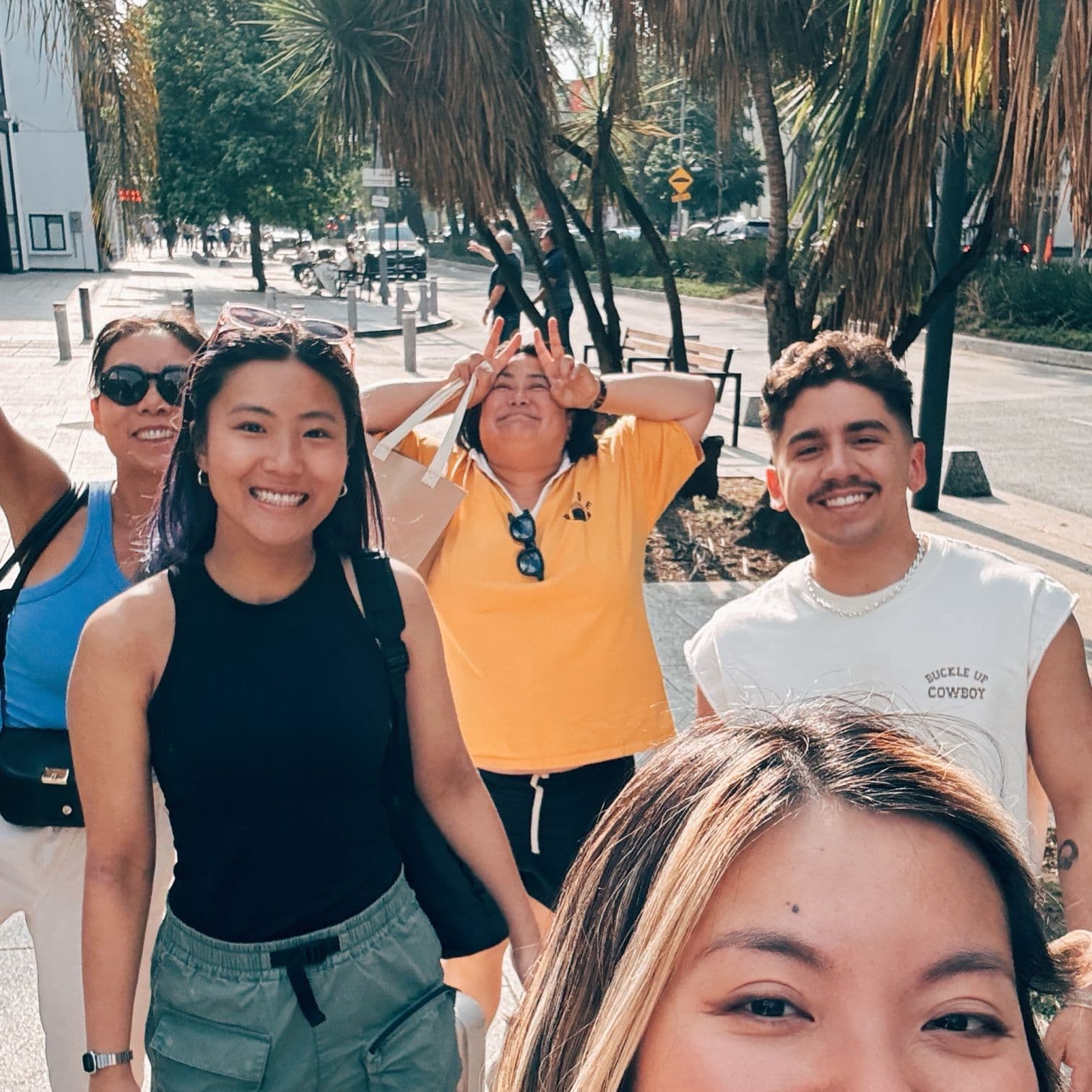
2025 has been crazy. I’m still catching my breath. We’ve been go-go-go since the start of the MAYHEM tour. What an unexpected year. We worked on things we once only manifested… and most of them actually happened. We collaborated with brilliant teams far outside the design bubble. Moved into our SF studio (plus a lot of cardboard-cutting actions). Welcomed our first-ever summer interns. Worked across Mexico City, Barcelona, and Vegas for both real work and real bonding. Logged over 8,000 hours of rapid sprints. And picked up three Webbys along the way.
Yung Studio was full this year.
I haven't written a studio memo in a while. Part of me wondered if people were tired of hearing about Gaga launches or “new feature this, new project that” every other week. Sometimes it felt like we were a bit “too much,” even for close friends. I just want to be quietly pushing our craft week after week.
But reflecting on this year, I see the pattern: what makes our work work. What actually holds us together as a team. The things that don't show up in case studies or awards, but absolutely shape who we are.
We choose new over neat every day
Teams that run like machines are great for maintenance, but terrible for new ideas. And there’s real research behind that. In organizational theory, James March describes this tension as exploration vs. exploitation: efficiency systems optimize for repetition, predictability, and minimizing error. Great for known tasks. Terrible for discovering anything new. Creativity needs variability, ambiguity, and space to explore, which efficiency naturally suppresses.
From the beginning, when we were working with early startups, the projects were short and the budgets were often tight. And most first time founders don’t like risk. We unfortunately had created “optimized” design concepts that lead to sameness when the studio was newly formed. But as we are getting more traction and visibility with our work. We dodged the moodboard spiral. We refused the overly strategized “approachability” that circles back to the same shit. Designers questioned me once in a while, “why do we keep pushing if this works?” I always responded, “that’s why the client came to us with this seemingly simple task”. The goal is not to be weird, but to go further, break the neat and comfortable system, to exhaust ourselves with possibilities until we settle.
Even now, no matter how big the client, predictability isn’t what we’re here for. We make strange physical and digital experiences, like fans sending emotions to stage in real time, or, tarot destiny powering “you’ll also like” merch recos. Because novelty is literally where the breakthroughs happen. The success of these projects firmed our commitment to ourselves to try harder, try again, to pursue newness.
How stretching became our superpower, unintentionally
Our collective engine works because the team is elastic. Everyone stretches beyond their lane. Everyone is not only an IC (Individual Contributor). Designers become motion artists, writers, prototypers, researchers, operators. We shift roles and we learn new things depending on what the work needs, not what our titles say. We fold those discoveries back into the next build. The engine strengthens with every cycle. Our best work happens when clients enter the engine with us, sharing raw ideas, giving honest critique, iterating in real time, shaping the work shoulder-to-shoulder. They become part of the system. Everything feeds everything.
Every week was something different. The mayhem (if you will) of finessing UX details to painting in Photoshop to laying out an art book ~ and staying in Vegas for nearly 2 weeks ~ was an absolute whirlwind. But I love that I can flex and challenge different skills. There truly is never a dull day at Yung Studio! Seeing everything that we did this year – I’m like damn that was crazy 🤪💕.
 Stephanie, Visual Designer
One thing I’ve really noticed is just how beautifully multidisciplinary this team is. Everyone wears so many hats and even I’ve started stepping into roles I’ve never done before. It can definitely be a double edged sword sometimes, but the balance here is kind of amazing, rough, but heartwarming. Everyone is so supportive, open-minded, and genuinely collective. The process isn’t traditional at all, but I love how everyone jumps into new tasks and challenges, pushes themselves, and figures things out with so much self initiative. It's not easy to do that. And honestly really inspiring and refreshing to watch.
 Yula Ye, Art Director & Visual Designer
That flexibility lets a small studio take on impossible timelines, unfamiliar formats, and entirely new mediums without losing craft or coherence. This way of working is exactly how we snagged three Webbys and made 16 projects memorable this year. It is the elasticity of the team, how we morph, adjust, reflect, and co-build, that becomes our superpower.
The ongoing obsession with how things are built
This year made something very clear: how a project turns out is never just about the design. The implementation of things like the safety, the operational realities, the invisible constraints, the way something lives in the world is just as important. As designers, we carry responsibility to the communities we’re designing for, not just the pixels on the Figma board.
We built a lot of prototypes in 2025. We spent as much time researching, planning, modeling, content managing, and QA-ing as we did designing. Non-design tasks became part of our studio rhythm: reviewing tech stack decisions, sitting inside backend ops, moderating live fan responses during shows. We were helping build the entire ecosystem around them.
I remember 2 years ago when we created a brand identity for an event. When the launch happened, it looked great, but we weren’t part of the build. And we felt it. If we had seen how things were actually being implemented, we would have made different decisions. That feeling used to follow me through my agency life too.
So last year, we flipped the coin. We chose to stay close, really close, to the build. We watched how the design behaved, how it broke, how it transformed under pressure. We adjusted alongside dev partners and print partners in real time, based on actual event interactions, backstage constraints, shipping timelines, and last-minute risks. Perfecting the work became an ongoing activity, not a handoff. Staying close meant obsessing until the end.
I still think about something Stefani Germanotta (Lady Gaga) told us, the fans show up for her, so we have to make sure everything is done the best way possible. We, the designers, carry as much responsibility as the artist to deliver for the community. We even killed a huge fan activation concept at the very end because we knew it wasn’t good enough. It broke our hearts. But the real questions mattered more: Will this violate local city rules? Will non-ticket fans feel excluded? Could someone get hurt? Design is just one part of the equation. The way it lives in the world matters more.
We feel our purpose most when we see the community reacting through messages, photos, and shares. That is when all the non-design hard work feels meaningful. The fans notice the details with us. John Rodriguez, our 3D designer, captures it perfectly.
For most of my career, my work lived on social or small digital screens. This year, it existed in the physical world on trailers, merch, preshow animations, things people touched and photographed. Seeing fans interact with what we made was surreal. These were not assets anymore; they became real moments in people’s lives. That shift changed everything for me. The work did not sit on a screen. It lived out in the world with people. It pushed me to learn fast, adapt fast, and deliver at a scale I had never touched before. And when I saw how it all fed into the energy of the Gaga community, the work carried a new kind of meaning. It made everything we built feel truly worth it.
 John, 3D Artist & Motion Designer
The real team building happens after the build
The bonding isn’t only in the storm; it’s in the quiet after. After the launch. After the sprint. After the all-nighter, the tour show, the surprise insight. That’s where the real team building hides.
In 2025, we got better at the after: weekly all-hands, honest post-mortems, refining our tools and workflows, and reflecting on what worked and what didn’t (sometimes even with clients right in the room). These check-ins are where the team gets wiser, tighter, more synchronized. It’s team building through refinement, through making, not just through social events (though we had plenty of those too lol).
Behind the scenes, this is the year we grew from a scrappy studio into a true Experimentation Engine. We learned how to scale without losing our weirdness, how to move faster without breaking each other, how to push further while staying aligned.
It’s the layer of growth no one sees from the outside, but I feel it deeply. I’ve never felt this level of shared evolution before.
Thank you!
Thank you Stephanie Jung, John Rodriguez, and Yula Ye for stretching beyond your lanes and choosing new over neat with us.
Thank you Michael Polansky, Stefani Germanotta, Bobby Campbell, Cassie Cooney, Megan Meeker, Marina Pavlovic Rivas, Thomas Cortina, Zoya Brar, Cristina Shin, Emilie Faure, Lauren Farleigh, Mac Hughes for entering the engine with us, sharing raw ideas, giving honest critique, and shaping the work shoulder-to-shoulder.
Thank you Commerce-UI (Simon Wesierski, Michal Klim, Robert Suchocki, Paweł Mikołajczyk), Viso Haus (Manuel Sofia Sainz, Vicky Rodríguez), Stephen Gould (Bob Challinor, Grant Challinor), and Bravado for obsessing over the implementation details as much as we do.
Thank you Cristina Lopez and Jeremy Nishimura for running our payroll and keeping our business legit and legal ;)
Thank you Alex Solod, Stephanie Hardy, Owen Schmidt, Nadine Macapagal, Dogan Uludogan, Francois Dransart, Christina Twigg, Gregory Taxerman, Eric Louis Haines, Alex Garcia, Nick Dean Smith, Caleb Couturie, Shelby Williamson, Yu Rong, and Michael Quinn for giving us a lift when we’re underwater.